
Standard Model (SM) is a theory in particle physics that describes three of the four fundamental forces — strong, weak, and electromagnetic forces — as well as the basic particles that make up all matter. It belongs to the realm of quantum field theory and is compatible with quantum mechanics and special relativity.
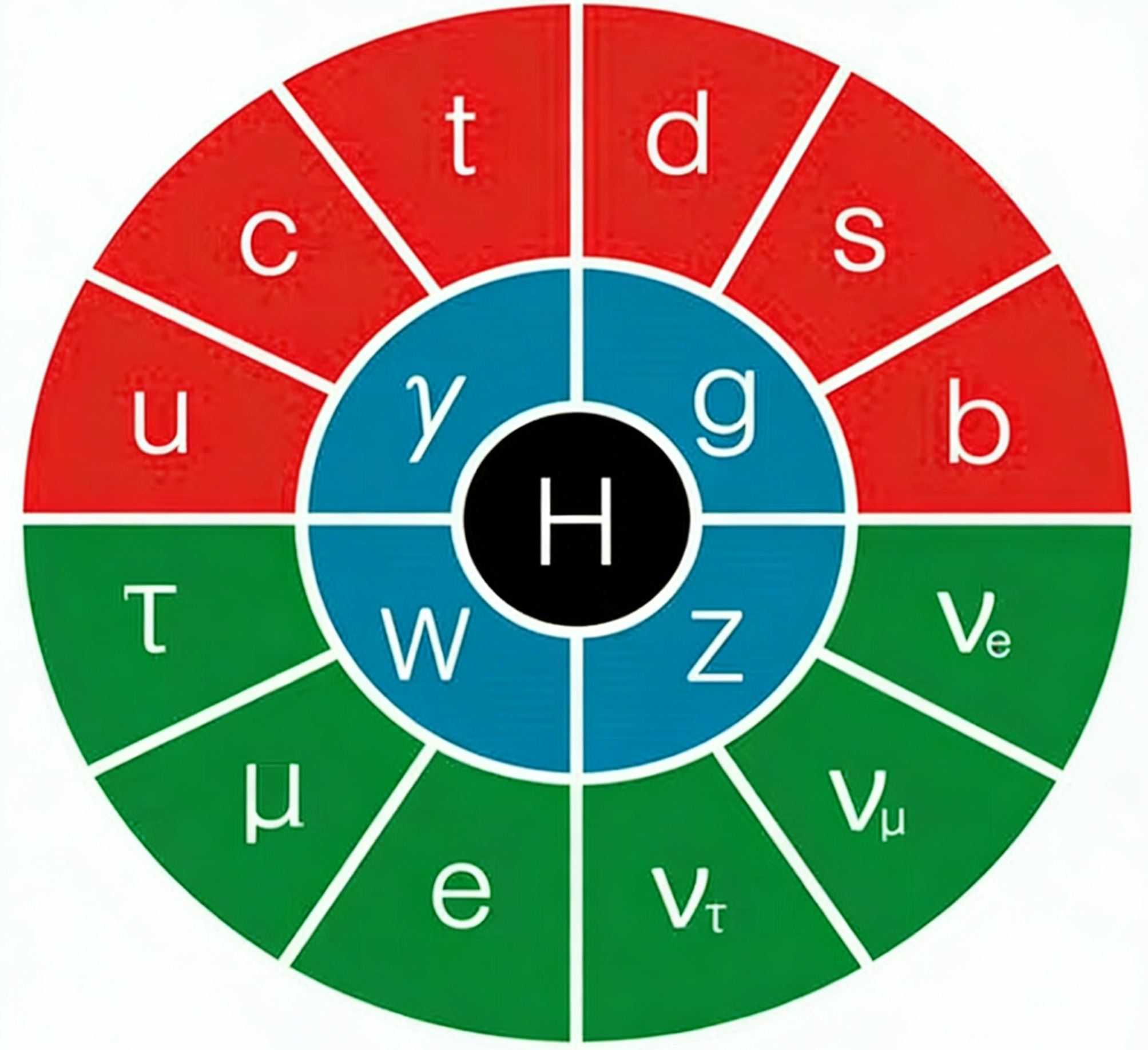
Bosons: H-Higgs boson, g-gluon, γ-photon, Z-Z boson, W-W boson
Fermions: Green - Leptons (in order: tau, muon, electron, tau neutrino, muon neutrino, electron neutrino), Red - Quarks (in order: up, charm, top, down, strange, bottom)
The Standard Model includes a total of 61 elementary particles (see table and image above), comprising fermions (matter constituents) and bosons (force carriers).
——Fermions are particles that have half-integer spin and obey the Pauli exclusion principle, which states that no two identical fermions can occupy the same quantum state;
——Bosons have integer spin and do not obey the Pauli exclusion principle.
| Category | generation | Antiparticle | color | Total | |
|---|---|---|---|---|---|
| Quark | 2 | 3 | in pairs | 3 | 36 |
| lepton | 2 | 3 | in pairs | Colorless | 12 |
| y-jelly | 1 | 1 | oneself | 8 | 8 |
| W particle | 1 | 1 | in pairs | Colorless | 2 |
| Z particle | 1 | 1 | oneself | Colorless | 1 |
| g-photon | 1 | 1 | oneself | Colorless | 1 |
| H-Higgs boson | 1 | 1 | oneself | Colorless | 1 |
| Total | 61 |
| Elementary particles | Fermion | Quarks: u · d · c · s · t · b and their corresponding antiquarks |
| Boson | Leptons: e- · e · μ- · μ · τ- · τ · νe ·νeAntiparticle · νμ · νμ Antiparticle · ντ · ντ Antiparticle | |
| Composite particle | Hadron | Baryons/Nucleons/Hyperons: p · p · n · n · Δ · Λ · Σ · Ξ · Ω · |
| Mesons/Quarkonia: π · K · ρ · D · J/ψ · Υ | ||
| Others | Atomic Nucleus · Atom · Exotic Atoms: Positronium · Muonium · Mesic Atom · Hyperatomic Atom · Antihydrogen · Meson Nucleus · Hypernucleus · Heavy-flavor Hypernucleus · Molecule |
Quantum Field Theory
Quantum Field TheoryCombinedQuantum Mechanics、Special Theory of RelativityandClassical Field Theory, and also the mathematical foundation and theoretical framework of the Standard Model of particle physics
In quantum field theory,A particle is a quantum excitation of a field.,Every particleEach has their owncorresponding field. (Within the framework of quantum field theory,The fundamental form of matter is the 'field'., and the various particles we observe are, in essence, the excited states of their corresponding quantum fields. For example,An electron is an excitation of the electron field.,A photon is an excitation of the electromagnetic field.。)
Quantum Fluctuation
In quantum mechanics,Quantum fluctuations (quantum vacuum fluctuations, vacuum fluctuations)) is inAny position in spacegeneratePositive and Negative Virtual ParticlesRight, and then againRapid AnnihilationThe process of (temporary changes in energy) can be derived from Heisenberg's uncertainty principle.
Does it violate the law of conservation of energy?
Quantum fluctuations seem to violate the law of energy conservation, but such fluctuations occur anywhere in space, and the energy exists for a very short time; the moment passes, and it disappears.
The total energy fluctuates like the waves of the sea; locally, there are highs and lows. On a large scale, however, the total amount of water in the sea remains constant, so the law of conservation of energy is not violated.
Although it does not violate the law of conservation of energy, it affects the motion of particles, causing the computation of particle motion to require radiative corrections. For higher-order perturbative correction effects of interactions, renormalization methods must be used to eliminate divergent terms when calculating via Feynman diagrams. Its physical effect is manifested in the characteristic of interaction strength varying with momentum.
Vacuum Zero-Point Energy
The vacuum in quantum mechanics is different from the vacuum as commonly understood. In quantum mechanics,A vacuum is not a space entirely devoid of matter.,Virtual particlecontinuouslyRandom GenerationAnnihilating again at arbitrary positions in space, after taking these quantum effects into account, the lowest energy state of space is the energy state with the lowest energy among all energy states, also known as the ground state or 'vacuum state.' The space in the lowest energy state is the true vacuum of quantum mechanics.
Casimir Effect Experiment Verifies Vacuum Zero-Point Energy
``In the Casimir effect experiment, two parallel metal plates are placed in a vacuum. Because the metal plates restrict the modes of vacuum fluctuations between them, a tiny attractive force is generated between the plates.
The Large Hadron Collider detects the production of new particles from collisions(VerificationQuantum Fluctuation)
The physical processes that occur in a collider, including collisions, the production of new particles, and their subsequent decay into stable particles, are called resonances. When the energy of the colliding particles is near that of a new particle (virtual particle), the high energy of the collision has a small probability of being converted into mass (an experimental phenomenon, though the specific theoretical details are still debated),, this gave rise to a new particle, and obtain a final stable particle distribution with certain characteristics through the above reaction.
The four fundamental forces (or interactions)
| Types of Forces | Interacting objects | Force intensity | Stroke |
|---|---|---|---|
| Universal Gravitation | All particles | 10-34N | Infinity |
| Weak strength | Most particles | 10-2N | <10-17m |
| Electromagnetic force | Charge | 102N | Infinity |
| Powerful | hadrons, mesons, etc. | 104 N | 10-15m |
Electromagnetic interaction
It is manifested as the interaction between charged particles and the electromagnetic field, as well as the force between charged particles transmitted through the electromagnetic field in the form of photons.
On the macroscopic scale, it follows the Maxwell equations.
At the microscopic level, it is described by quantum electrodynamics (QED).
In the microscopic world of QED, due to quantum fluctuations, countless pairs of particles and antiparticles suddenly appear and quickly annihilate. To describe the interaction between two charged particles (such as electrons) through the exchange of virtual photons (these virtual photons are not observable real photons but a manifestation of quantum fluctuations), one needs to sum the probability amplitudes for all possible processes (i.e., all Feynman diagrams that do not violate fundamental conservation laws).
strong interaction
The strong interaction is the strongest of the four fundamental interactions in nature, with a range of about 10-15 meters. The strong interaction overcomes the powerful repulsive force generated by the electromagnetic force, tightly binding protons and neutrons into atomic nuclei.
All subatomic particles affected by the strong interaction are called hadrons. According to the Standard Model theory of modern particle physics, hadrons are composed of quarks, antiquarks, and gluons.
·In mathematical terms, the strong interaction is described by quantum chromodynamics (QCD), which is a gauge field theory, whose core is that the strong interaction between quarks with color charge is transmitted by exchanging gluons to convey the strong force.。
At present,Quarks cannot exist independently, and they are always bound inside hadrons by gluons。
.``The composite particles we are familiar with, such as protons and neutrons (collectively known as hadrons), derive about 99% of their mass from the enormous kinetic energy of the internal quarks and the energy carried by the massless gluons that mediate the strong interaction (according to the mass-energy equivalence principle, energy manifests as mass).Only about 1% of the mass can be attributed to the Higgs mechanism that gives quarks their fundamental mass, Quantum Chromodynamics (QCD) describes the high energy within quarks, causing these zero-mass gluons to cluster together near quarks in the form of virtual particles (quantum fluctuations).
The 'behavior' of glue is very much like a spring:
`When quarks are very close to each other (high energy), this 'spring' is very relaxed, the interaction is weak, and the quarks are almost free. This characteristic is called asymptotic freedom.;
And when a quark tries to separate (at low energy), the gluon 'spring' generates an extremely strong interaction force that pulls it back, making it impossible for the quark to ever escape(When quarks are very close to each other (high energy), this 'spring' is very relaxed, the interaction is weak, and the quarks are almost free. This characteristic is called asymptotic freedom.It is asymptotic freedom), this phenomenon is jokingly referred to as "quark confinement" or "quark prison."
The binding force is so strong that if you try to completely tear two quarks apart, the energy injected is enough to create a new quark-antiquark pair in the vacuum, resulting in the fact that you can never get an isolated quark.
弱相互作用力
弱相互作用力属于短程力(作用范围小于10-15米),作用于夸克、电子等费米子,通过交换W±andZ玻色子传递,具有宇称不守恒特性。
要是说强相互作用力是把原子核粘合在一起,那弱相互作用力就是主导原子核的裂变.
但是弱力的作用力程非常短,几乎为零,即参与相互作用的粒子彼此一离开,力就迅速地消失了。(弱力没有本领把任何粒子束缚在一个较复杂的体系中,它只存在于一些粒子发生衰变和俘获的一瞬间,粒子之间一离开,弱力马上就消失。)
在β衰变、中子衰变等过程:(中子→质子+电子+中微子),弱力通过改变夸克味量子数实现衰变。
半衰期
半衰期或衰变常量表征是指放射性核素衰变至原有数量一半所需的时间(每过一个半衰期,物质变至原有的一半,如,1/2 —一个半衰期、1/4—两个半衰期 、1/8 —三个半衰期、1/16 —四个半衰期、1/32—五个半衰期 )。
量子隧穿—在哥本哈根诠释下的初略解释(并非弱力)
根据海森堡不确定性原理的能量-时间不确定原理,能量与时间不能同时被确定,但粒子遭遇位势垒的时候,它需要借一份能量 E 来穿过它,而这个粒子有 t 的时间来穿过位势垒,并把借来的能量 E 还回去,因为能量和时间不能同时被确定,所以时间 t 的长度是不能被确定的,这便给了粒子“钻空子”的机会,使其穿入或穿越能量大于该粒子总能量的位势垒。
宏观量子隧穿(并非弱力)
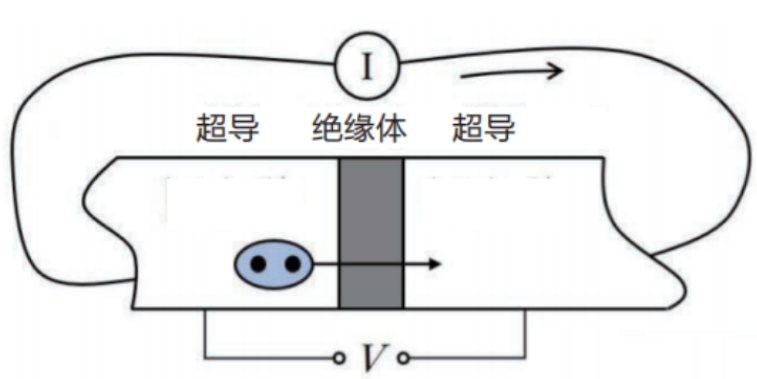
约瑟夫森提出了一种特殊的结构:超导层—薄绝缘层—超导层(下图)。(薄绝缘层–很薄的势垒层 — 厚度 ≤ Cooper电子对的相干长度),称为“约瑟夫森结”或称为超导隧道结。无阻流动的库珀对,以一定概率无损耗地跨过绝缘层流动到了对面的超导层,产生隧穿电流。约瑟夫森也因此构想,获得1973年的诺贝尔物理学奖。
中子衰变—应用量子隧穿效应解释原子核衰变
粒子可以概率性的穿过原子核的位势,从而逃出原子核的束缚。由于中子质量大于质子质量和电子质量之和,自由状态下的中子并不稳定,其平均寿命为约880.2秒。
在这里的表现是,其核内电子有概率穿入或穿越能量大于该电子总能量的原子核位势垒,并释放一个电子、一个反中微子和能量,同时中子衰变为质子。
补充:在原子核中的中子大多数是稳定的,因为根据原子核壳模型,原子核中的中子和质子都是处于能量较低的量子态中;在稳定原子核中比中子能态更低的质子能态已被质子填满,中子衰变产生的质子不能进入更低的质子能态,因此中子衰变没有发生。在不稳定的原子核中存在着能量上允许的质子的量子态,供中子衰变产生的质子占用,因此就有可能发生原子核内中子的衰变。例如,14C(6个质子,8个中子)β衰变成14N(7个质子,7个中子)的过程中,就有一个中子衰变。一般来说,处于β稳定线的原子核中的中子是稳定的,但是在远离β稳定线的丰中子核和中子滴线中,中子则是不稳定的,要进行β衰变。这些核中的中子衰变寿命就是这些核的β衰变寿命。
W玻色子与Z玻色子获得质量
在标准模型里,希格斯机制于希格斯场赋予(无质量的)W玻色子与Z玻色子质量,费米子借着应用希格斯机制于希格斯场与费米子场的汤川耦合而获得质量。
K介子(θ–τ)衰变存在CP对称性破缺现象,并以此提出的弱作用宇称不守恒理论
宇称不守恒定律是指:在弱相互作用中,互为镜像的物质的运动不对称(由吴健雄用钴60验证)。
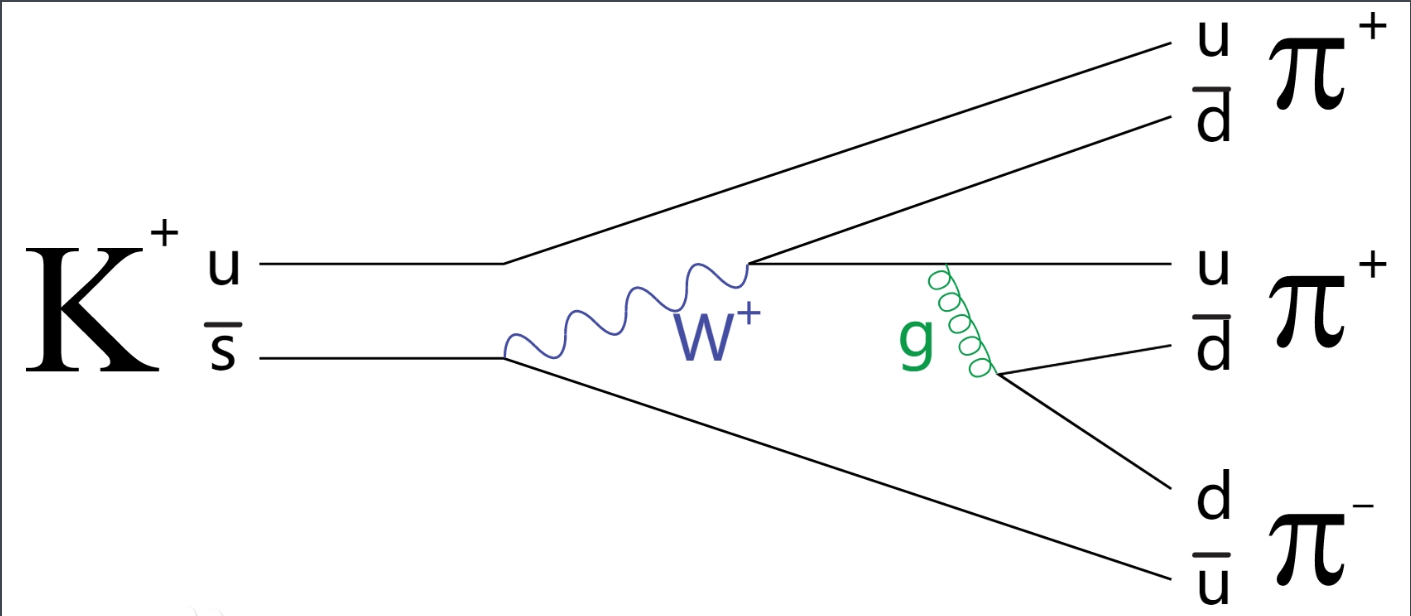
当时物理学家发现有两种K介子,它们自旋、质量、寿命、电荷等完全相同,但是衰变却不同:一种衰变成两个π介子;一种衰变成三个π介子。为了区别它们,便将前者命名为θ介子,后者命名为τ介子(后来都被称为K介子)。
θ+ → π⁺ + π0
τ+→π⁺ + π⁺+π–
1956年,李政道与杨振宁经研究(包括但不限于,对β衰变的实验进行数据统计)后断言τandθ虽为同一种粒子,但在弱相互作用的环境中,它们的运动规律却不一定完全相同,后统称为K介子。二人也因此理论获得1957年获诺贝尔物理学奖。
随着研究的深入可知,K介子是由奇夸克与反上夸克或反奇夸克与上夸克组成
K介子典型衰变模式包括:
K⁰ → π⁺ + π⁻(短寿命态KS)
K⁺ → μ⁺ + νμ(约占63.5%)
K⁺ → π⁺ + π⁰(约占21.2%)
吴健雄在0.01K极低温下,利用强磁场使钴60原子核形成左右旋自旋的镜像装置,观测到衰变电子数和放射方向存在显著差异,从而证实了弱相互作用中的宇称不守恒。
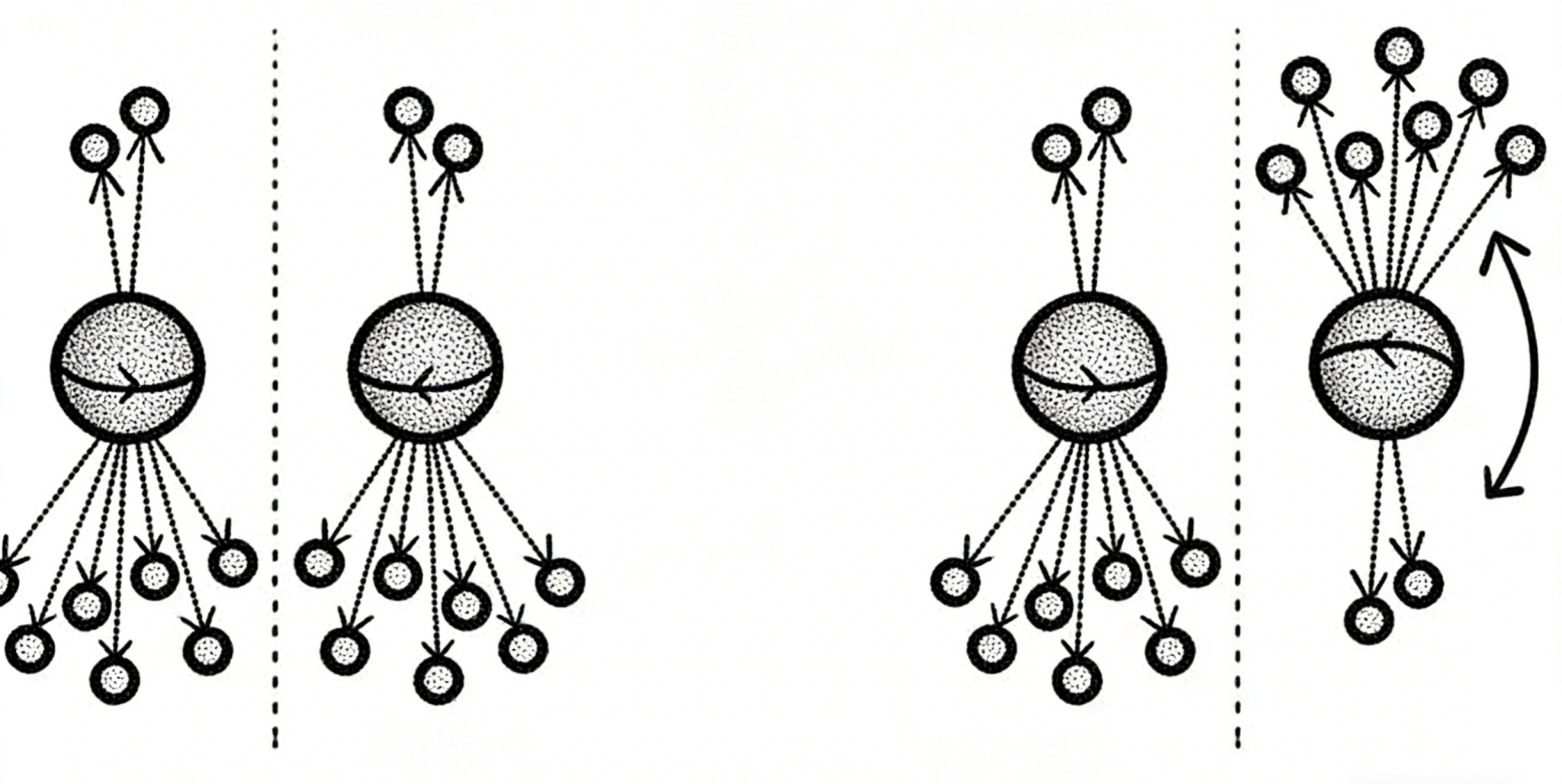
钴60的β衰变—左边为宇称守恒(推测),右边为宇称不守恒(实验结果)
弱场中宇称不守恒定律的其他体现
1998年欧洲核子中心观测到K介子衰变时间不对称性,2016年T2K实验发现μ介子中微子与反中微子行为不对称,2025年LHCb实验首次在底重子衰变中观测到CP破坏现象,同时兰州大学团队基于该实验在重子衰变机制理论研究取得突破
希格斯场
按照标准模型的希格斯机制,某些基本粒子因为与希格斯场之间相互作用而获得质量。希格斯玻色子是希格斯场的振动。
W玻色子与Z玻色子借着应用希格斯机制于希格斯场而获得质量,费米子借着应用希格斯机制于希格斯场与费米子场的汤川耦合而获得质量。只有希格斯玻色子不倚赖希格斯机制获得质量。不过尽管希格斯机制已被证实,它仍旧不能给出所有质量,而只能将质量赋予某些基本粒子。
例如,像质子、中子一类复合粒子的质量,只有约1%是归因于将质量赋予夸克的希格斯机制,剩余约99%是夸克的动能与强相互作用的零质量胶子的能量。